
PRIME caught the rain, AUTO inherited the garden
Creating a prime garden for RWA yields to flourish. Examining the growth of Hastra's AUTO and PRIME pools on Kamino in their first 14 days
- PRIME market growth, first 14 days
- 40.4x
- AUTO market growth, first 14 days
- 2.13x
- AUTO positions opened with Multiply
- 89.8%
- PRIME market size by mid-January
- $360m
On the 29th July, @HastraFi launched AUTO, a yield-bearing token driven by U.S auto loans tapping a $1.713 Trillion auto credit market. This comes after their highly successful PRIME market that launched on the 4th December which catapulted to $92m in the first two weeks and eventually grew to an enormous $360m market by Mid-January.
To give a brief overview of what AUTO is, its near-prime auto loans that are originated by Agora with a target of 9% APY. Whilst people may be cautious of auto credit markets due to higher default rates compared to other markets, AUTO carries several protections that significantly reduce the risk for the user ranging from a ~2.4x cash-flow cushion to the $25m first loss equity line from Figure. To read about the six layers of protection, read this article by Hastra.
Whilst PRIME's market on Kamino grew 40.4x in the first 14 days with AUTO only growing 2.13x in the same timeframe, both assets actually drew the same type of user. This article will explore the onchain data that the first 14 days of both AUTO and PRIME markets presented and show the similarities, differences and why current performance is not a verdict on AUTO.
Two Harvests
AUTO grew 2.13x from a starting TVL of $3.3m to $7.03m inside the first 14 days with 89.8% of the positions being opened using Kamino's multiply feature. Lending positions grew from 23 on the first day to 118 on day 14.
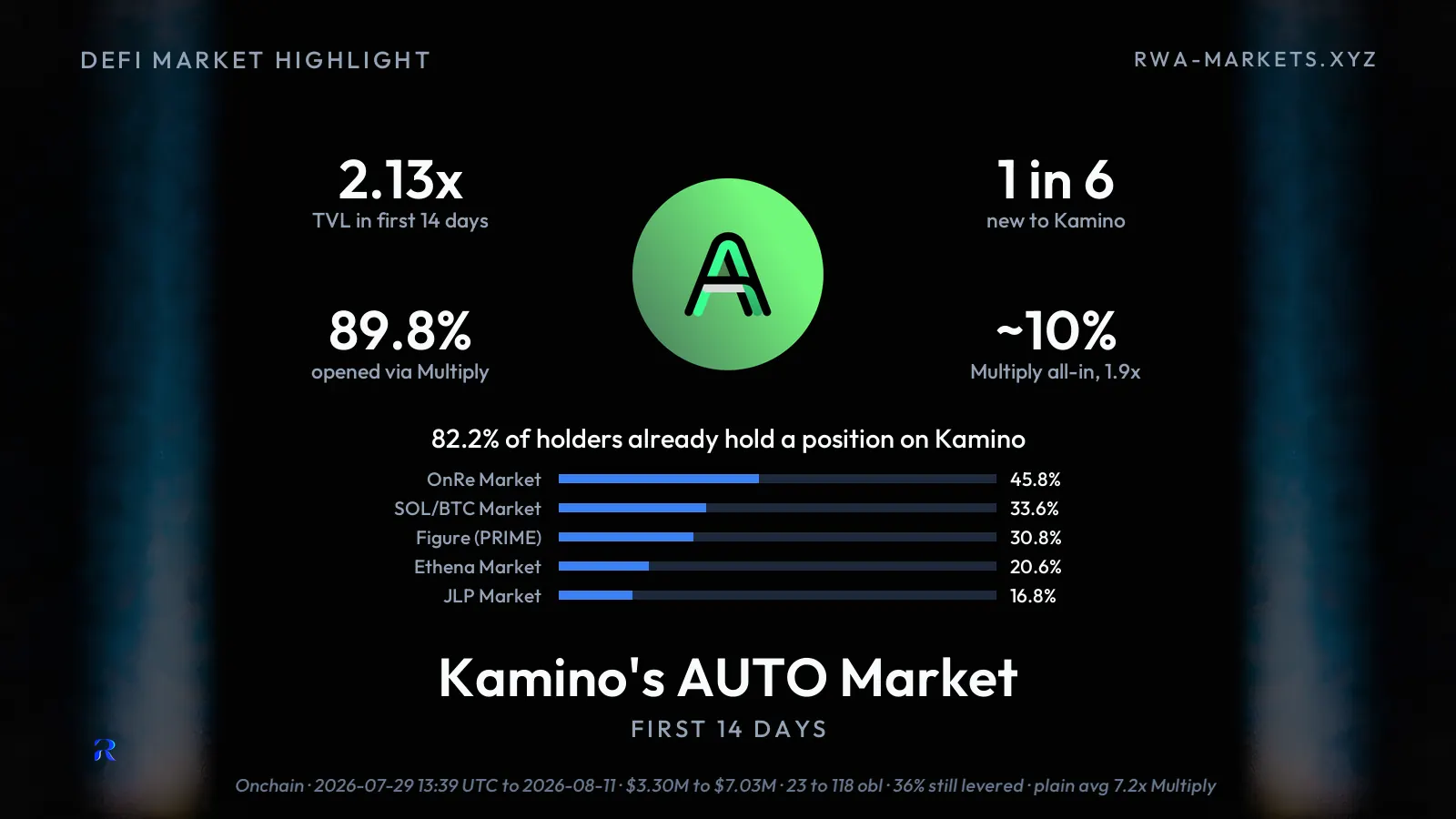
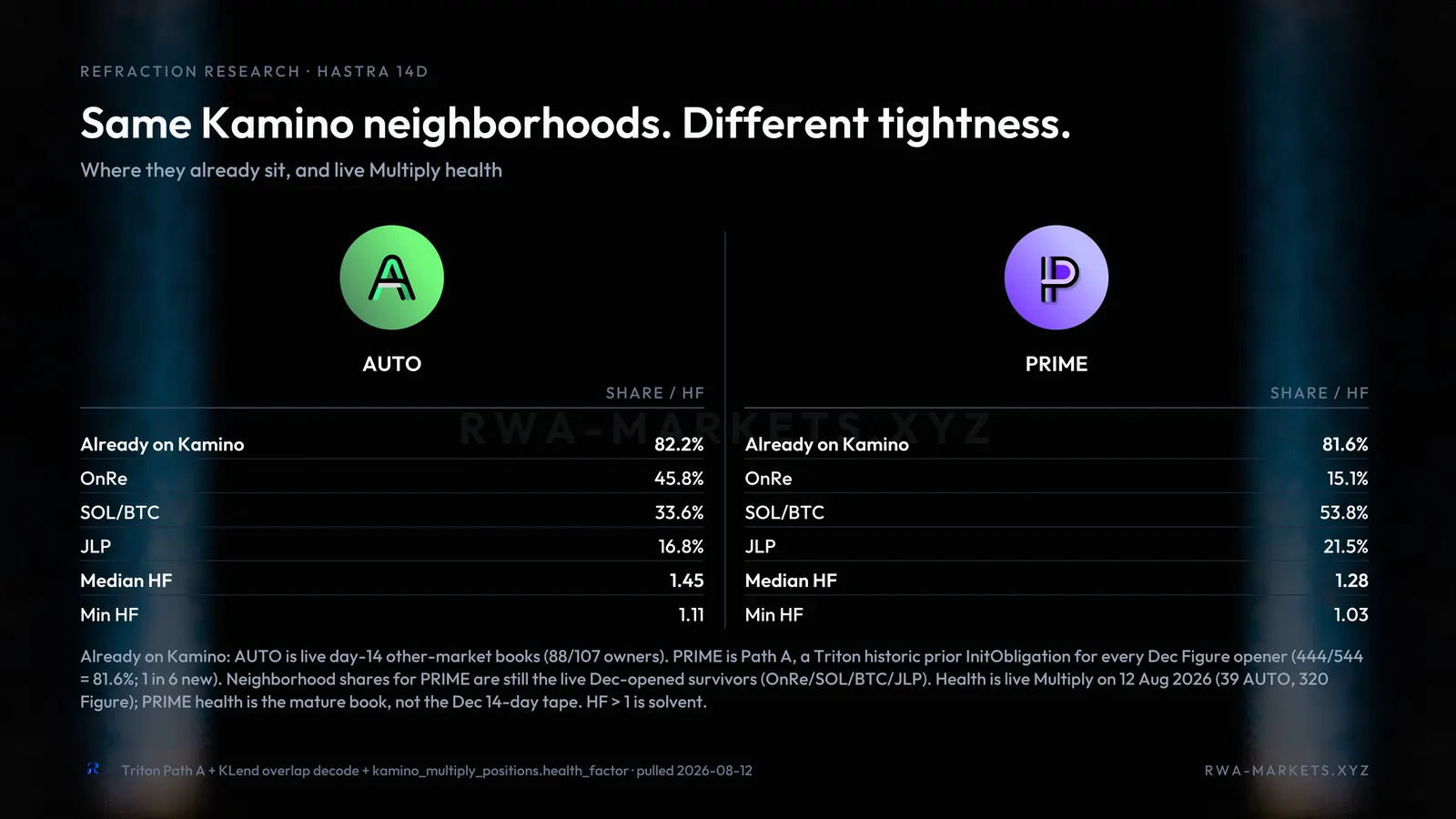
1 in 6 users in this pool were not on Kamino prior to this market and those who were already using the platform held positions in OnRE, SOL/BTC, PRIME, Ethena and JLP. The first day saw the pool TVL grow by 86% with a median growth of 0.8% per day.
PRIME on the other hand grew 40.4x from a starting TVL of $2.27m to $91.7m in its first two weeks. However, Kamino's Multiply feature was popular amongst users with 80.5% positions opened using this functionality.
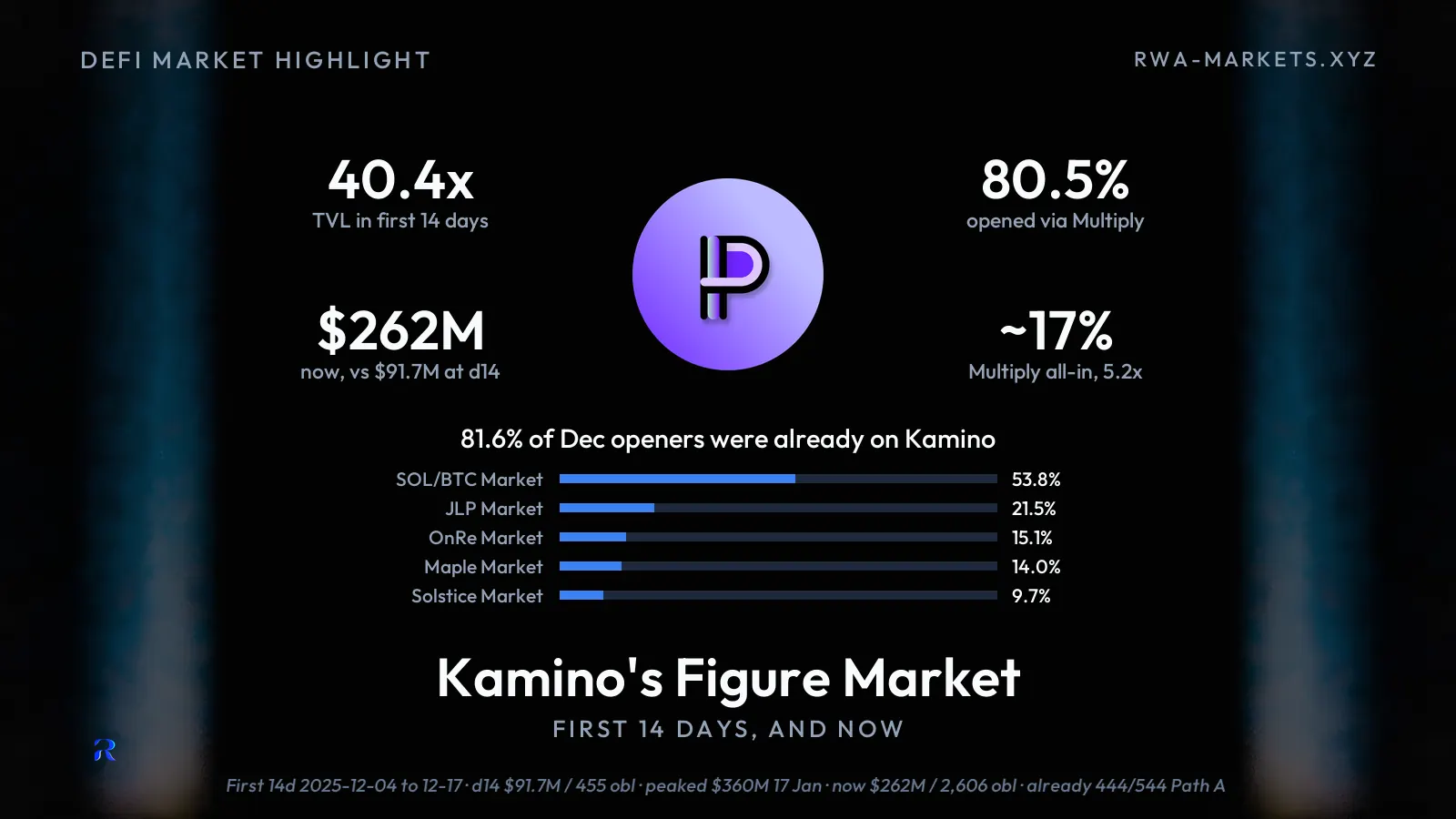
Lending positions on PRIME grew from 15 on the first day to 455 on day 14 with 81.6% of users already holding a position on Kamino matching AUTO's 1 in 6 users coming from other pools. It grew ~584% on the first day with a median growth of 19.6% per day, eventually growing to $360m across 2,029 positions by the 17th of January, 3.92x from the first 14 days. It later peaked at $437m and 3,092 positions on June 1st, 4.8x TVL and 6.8x the positions from day 14.
If AUTO were to experience similar growth to PRIME within the next month, it would put total lending positions at ~530 and ~$28m in TVL. If AUTO were to match PRIME's peak it would grow to ~800 positions and ~$34m.
The Same Gardeners
There is some overlap when looking at the initial launch behaviour of AUTO and PRIME. First is the way positions are opened, with both seeing above 80% of positions opened through Multiply. Second, plain APY at launch was similar at ~8% for AUTO and ~8.65% for PRIME and holder churn remained low for both as AUTO retained 85.4% holders and PRIME retained 79.2% holders.
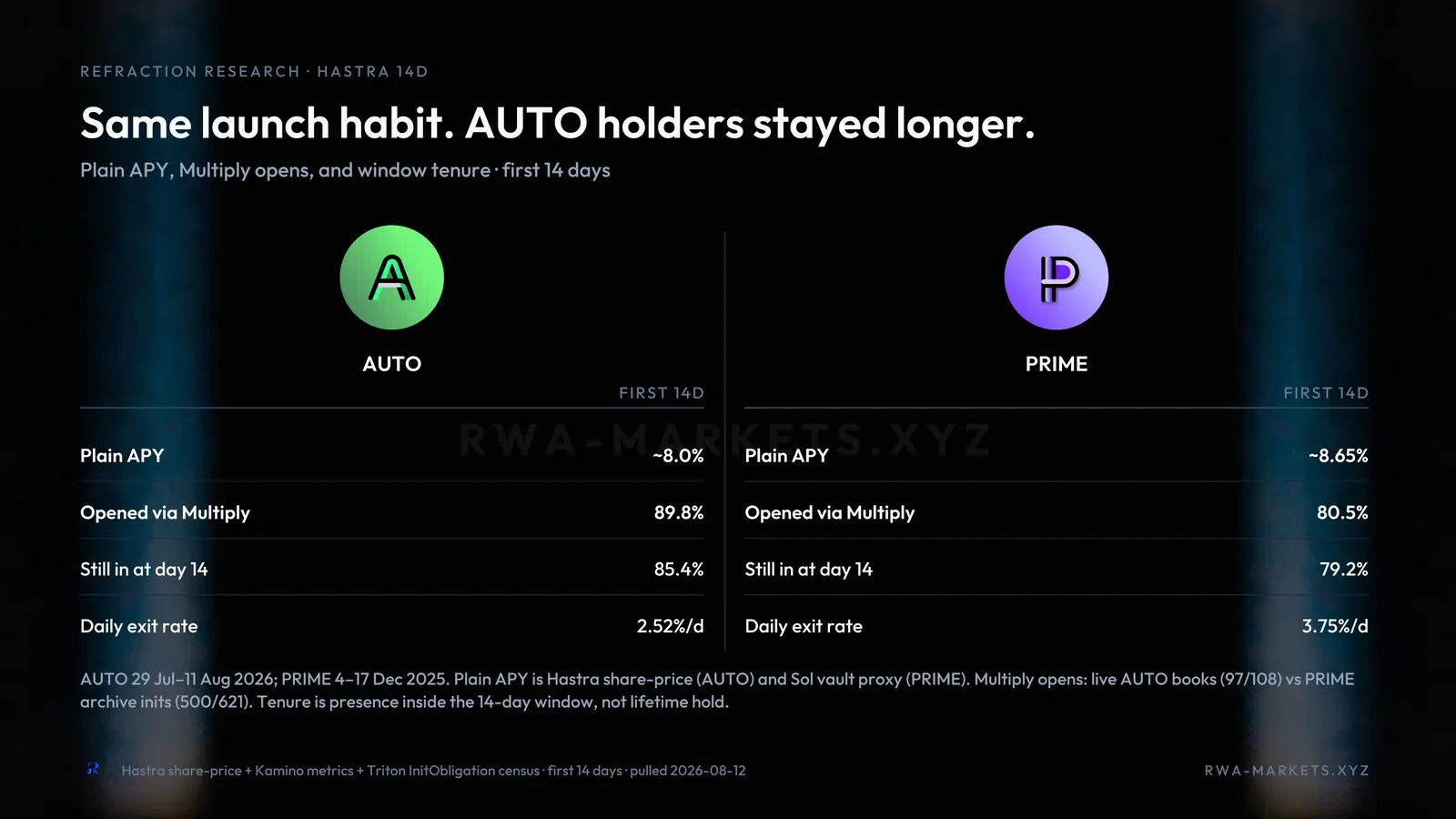
Both assets saw holders having positions in SOL/BTC, OnRE, and JLP with AUTO seeing more RWA bias than PRIME in its first 14 days. Aside from 40% of AUTO pool holders also holding a position in the PRIME pool, both assets saw front loaded growth. This shows that the capital which demands this asset positions itself early and then reaps the reward over the long term.
Different Weather
During PRIME's first 14 days in December 2025, Kamino's NON-RWA pools saw a reduction in size from $3.38B to $3.14B with the SOL/BTC pool size dropping by ~7.2% alone. At the same time RWA pools on Kamino grew 14.4% from $275m to $314m when excluding PRIME. This showed people were rotating from Crypto lending pools to new RWA pools. The environment prior to PRIME's launch reflects this with RWA lending growing ~31% with overall lends decreasing by ~19%.
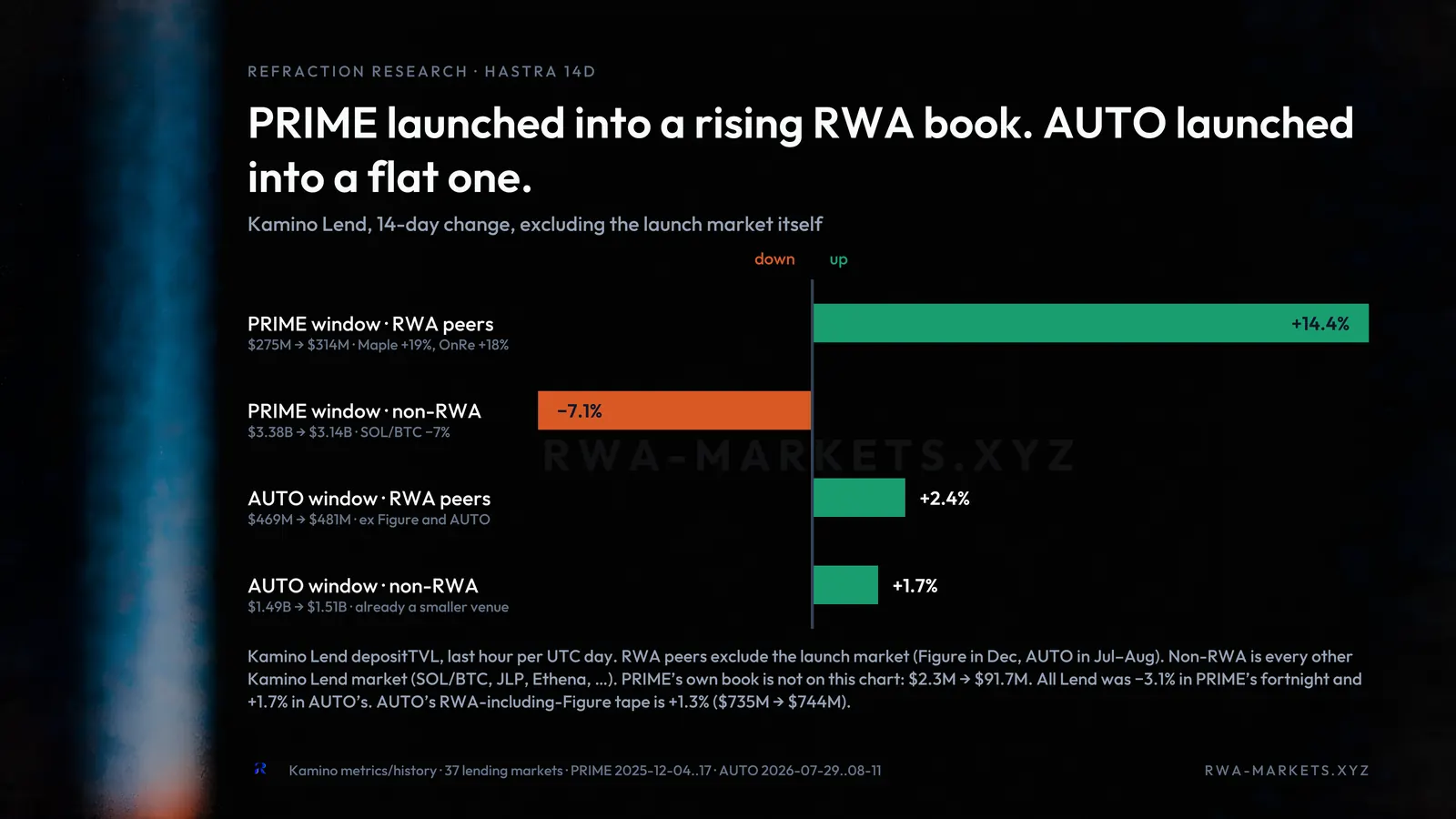
Comparing this to the launch environment for AUTO, both RWA and Kamino lending overall saw a moderate increase by 2.4% and 1.7% respectively. So when we consider these factors in addition to @Figure launching a RWA consortium on the launch date of PRIME, it explains the explosive growth of PRIME compared to the quiet blooming of AUTO. Capital was looking for places to weather the storm from bad crypto conditions during PRIME's launch whilst it was enjoying the peaceful aftermath of the bear market during AUTO's launch.
Whilst both assets started with similar base yields, how the Multiply feature affected them was different and this was reflected in the average leverage per position and its health.
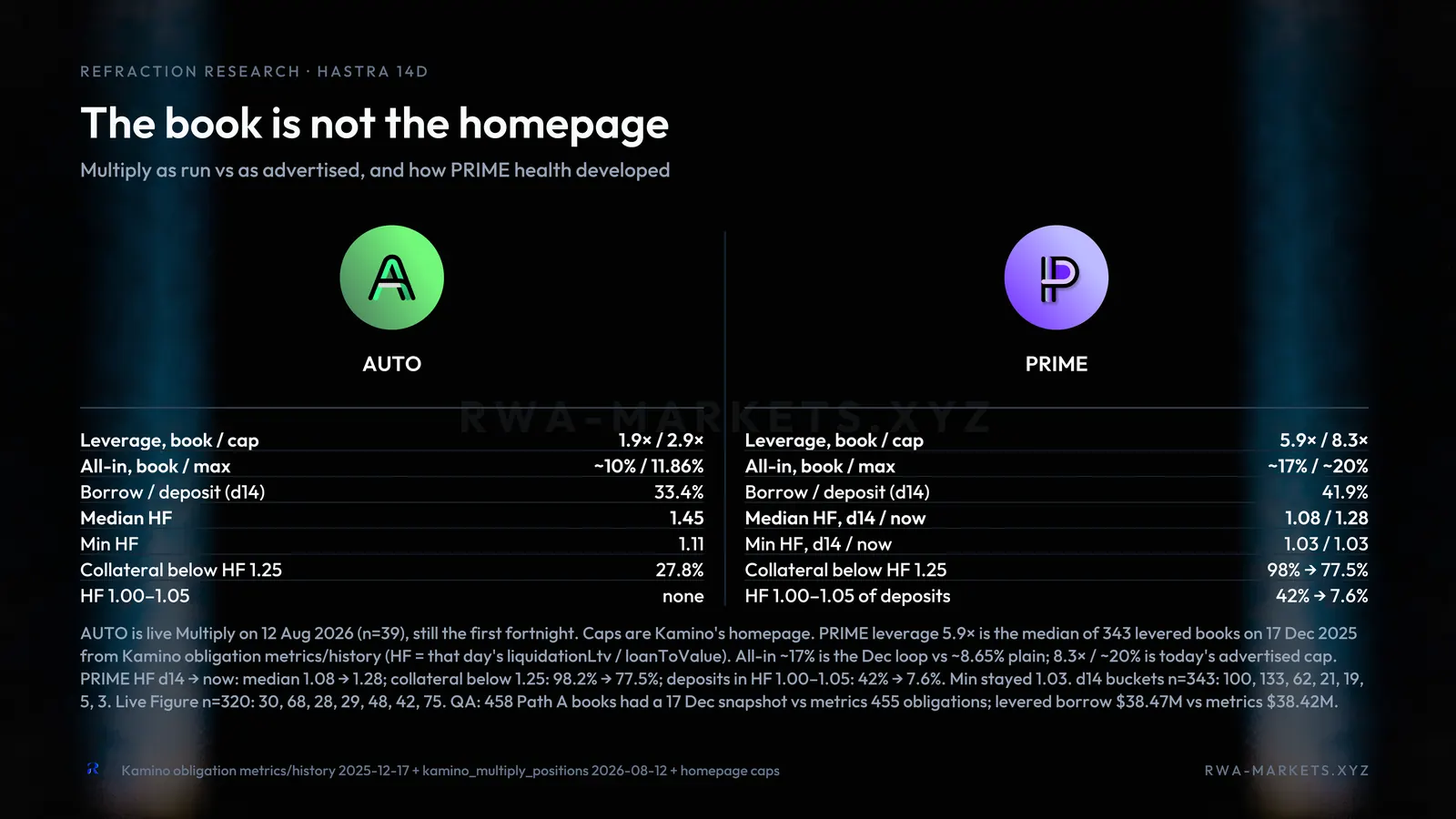
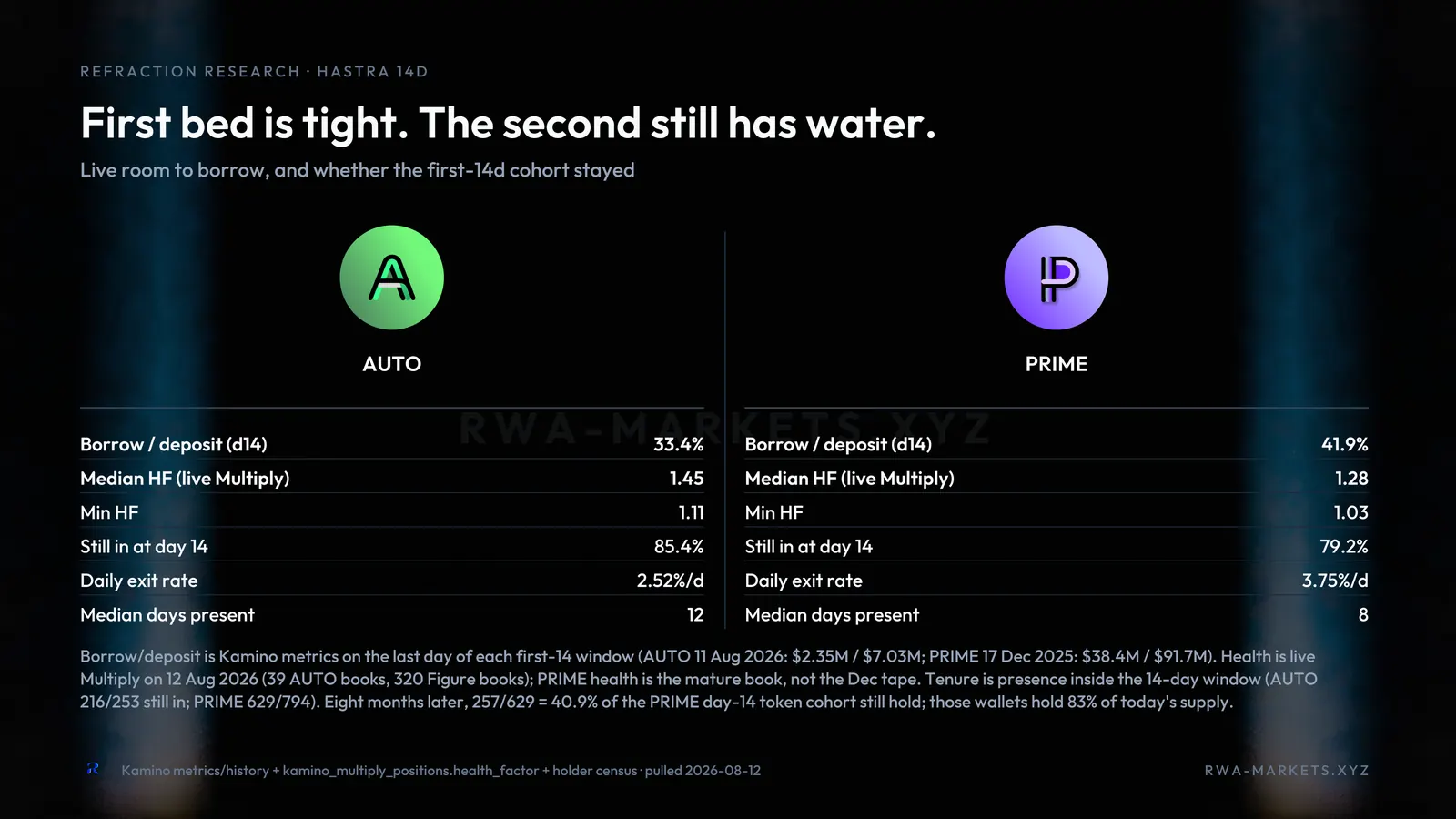
AUTO's Multiply book sits at 1.9x against a 2.9x cap with all in yield at ~10%, leaving ample amount of room from the 2.9x's 11.86% yield max. Day 14 utilization sits at 33.4% with a median health factor of 1.45 and minimum of 1.11. There are no positions in the 1.00-1.05 band with only 27.8% of collateral below 1.25.
PRIME's first 14 days went completely different. On the 17th December, the median leverage used sat at 5.9x against a 8.3x cap with all in ~17% yields against today's max ~20%. Utilization measured at 41.9% with a median health factor of 1.08 and a minimum of 1.03. An enormous 98.2% of Multiply collateral sat below 1.25 with 42% of deposits living in the 1.00-1.05 Health Factor band.
AUTO is still a ~37x smaller Kamino market than PRIME, but the cash markets they tap run the other way. Outstanding US auto credit is $1.713T; drawn HELOCs are $459B per the NY Fed’s Q2 Household Debt and Credit Report. Auto is 3.7x the HELOC book, and it also runs a higher 90+ delinquency flow at 3.00% vs 1.15%. That is why AUTO can still bloom if it is tended, and why protections such as the 2.4x cash-flow cushion matter.
After the Rain
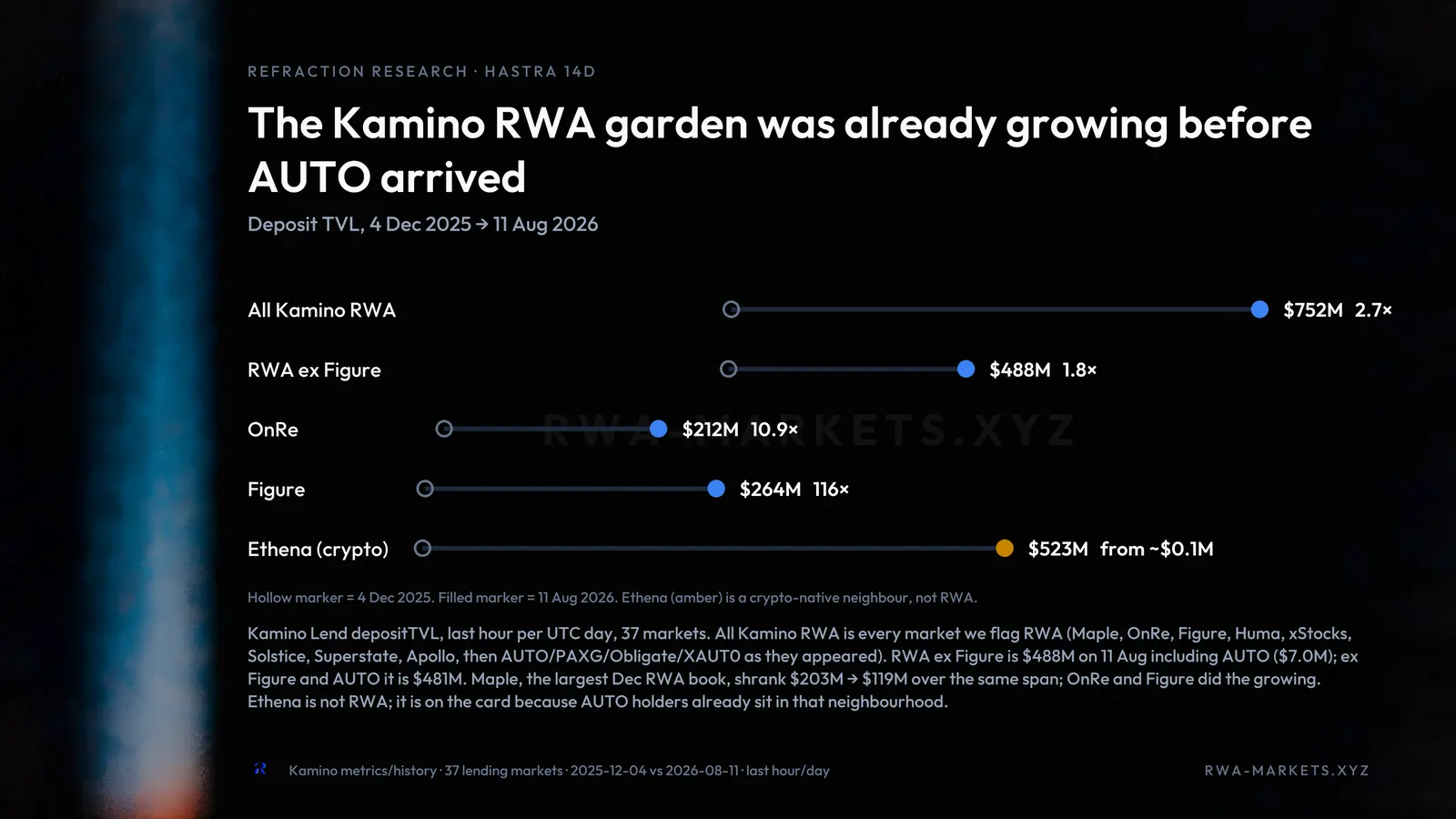
By the time AUTO launched, RWAs on Kamino were a fully blooming garden. Deposit TVL for RWAs went from $277m to $752m between December 4th to the 11th of August. Even if excluding Figure, TVL grew from $275m to ~$488m. OnRe alone grew ~10.9x in size from $19.5m to ~$212m and PRIME itself went from $2.3m to $264m with a peak of $437m in June. Meanwhile Maple, the largest in size during December shrunk from $203m to $119m showing that OnRe and mainly PRIME did the growing.
AUTO is the crop that stays in the ground as shown by the 14 day exit rate being a low 2.52%/d with 85.4% still holding with a 12 day median. Compared to PRIME's 79.2% and 8 day median, it is showing that AUTO inherited a garden that has been tried and tested by its predecessors. When looking at the longer term, 257 of the 629 day 14 PRIME holders haven't sold and actually make up 83% of the current supply's total holding. It will be interesting to see whether a similar or even stronger behaviour is exerted with AUTO considering that it still has space to borrow and was stickier and healthier in its first 14 days.
PRIME was Figure's own HELOCs. AUTO is the first external originator coming through the Figure Forge which in short, takes heterogeneous loans, pools them into $1 participation tokens and prices them off Figure's capital markets desk whilst letting them be redeemed into YLDS (linked to their article on Forge). Agora brought the auto loans; Forge homogenised them onto Hastra’s permissionless layer. Figure’s line is that each new originator adds asset classes on the same rails. Kamino is the garden those seeds land in.
The data shows that PRIME caught the rain and provided a perfect place for capital to weather the storm growing 40.4x in size within 14 days and then a further 3.92x to $360m by the 17th of January. Whereas AUTO inherited the garden that was already fully in bloom growing 2.13x in 13 days with a mildly growing Kamino RWA tape and a reduced Multiply leverage at 1.9x compared to PRIME's 5.9x. Whilst they had the same gardeners, the first bed is fully in bloom after catching the prime growth period whilst the second still has water and room to grow. The current size is not a verdict on the crop to come.
Disclaimer: This report is not financial advice. Kamino market figures were collected onchain via Triton RPCs and Kamino’s official APIs, and can be re-queried there. Auto-credit TAM and delinquency figures are from the New York Fed’s Q2 2026 Household Debt and Credit Report. Product-design quotes are from Hastra and Figure’s own posts, linked above. Scale illustrations in the outlook are not forecasts. Refraction Research is independent of Hastra, Figure, Agora, and Kamino.